"Every shelf tells a story. Make yours unforgettable with our handpicked titles."
Book Synopsis:
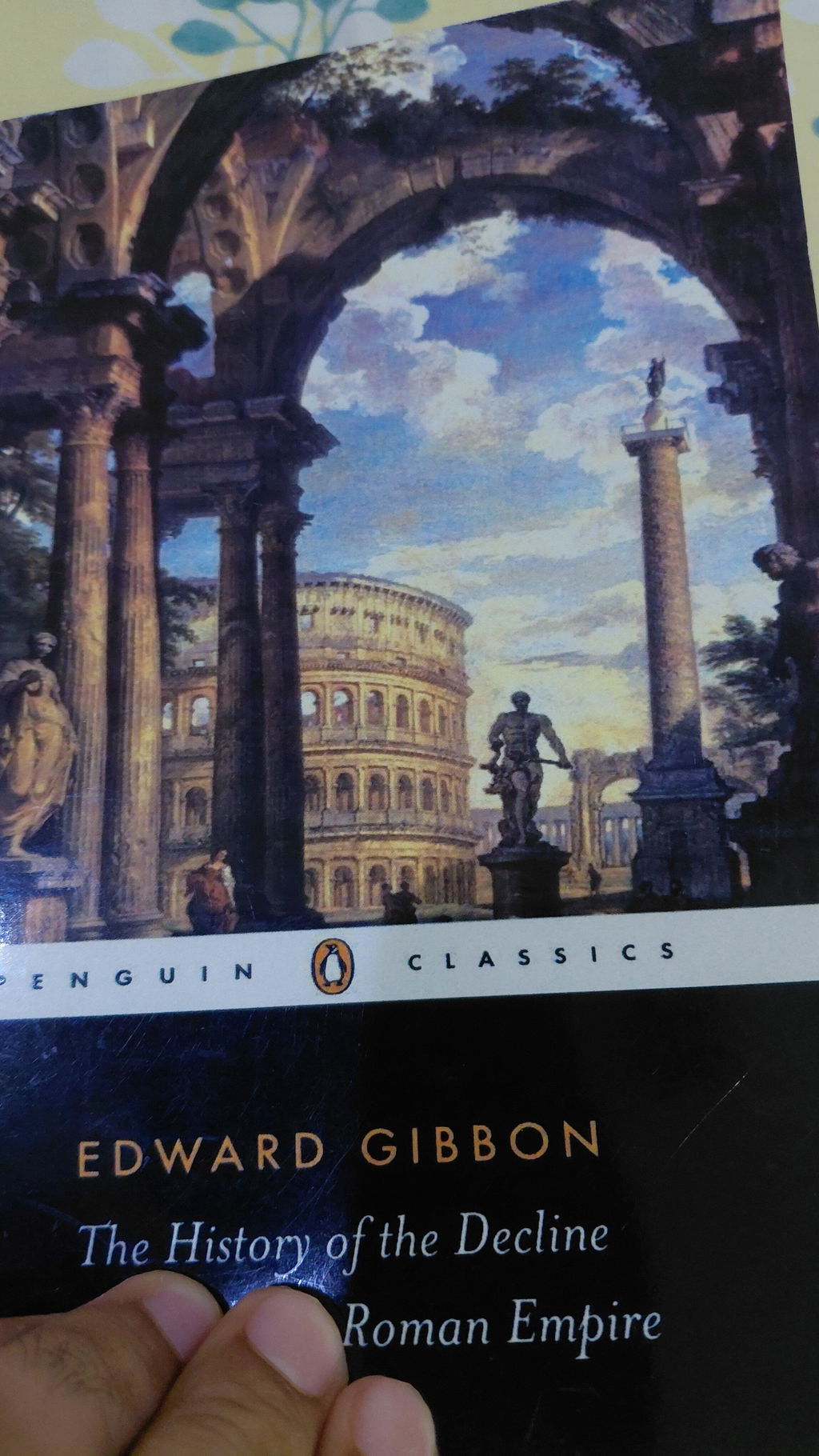
The Decline and Fall of the Roman Empire by Edward Gibbon is one of the most influential works of historical scholarship ever written. First published in the eighteenth century, this monumental study traces the history of the Roman Empire from its height of power in the second century to the collapse of the Western Empire and the fall of Constantinople. Gibbon’s work remains a cornerstone of classical history, admired for its scope, narrative strength, and critical approach to historical sources.
Gibbon explores the political, military, economic, and cultural factors that gradually weakened Roman authority over centuries. Rather than presenting the fall of Rome as a single event, he portrays it as a long process shaped by internal corruption, administrative inefficiency, economic decline, and constant external pressure from barbarian invasions. His analysis highlights how the empire’s vast size, once a symbol of strength, became increasingly difficult to govern and defend.
A central theme of the book is the transformation of Roman society. Gibbon examines the erosion of civic virtue, the growing reliance on mercenary armies, and the shifting balance of power between emperors, generals, and bureaucrats. He also investigates the role of religious change, particularly the rise of Christianity, which he controversially argued altered traditional Roman values and institutions. Whether or not readers agree with his conclusions, his arguments have shaped historical debate for more than two centuries.
What distinguishes Gibbon’s work is its literary quality as much as its scholarship. Written in elegant and precise prose, the narrative combines detailed documentation with philosophical reflection. Gibbon does not merely recount events; he interprets them, seeking to understand the broader patterns of human behavior, political ambition, and cultural transformation that influenced the fate of empires.
The book also offers insight into the Eastern Roman, or Byzantine, Empire, showing how Roman traditions continued long after the fall of the West. By extending his history across a vast geographical and chronological range, Gibbon provides readers with a comprehensive vision of the ancient world and its gradual transition into the medieval era.
Despite being written centuries ago, The Decline and Fall of the Roman Empire remains highly relevant. It serves as both a detailed historical record and a timeless reflection on the fragility of power, the responsibilities of leadership, and the forces that can bring even the greatest civilizations to ruin. For students, scholars, and general readers interested in classical history and the dynamics of empire, Edward Gibbon’s masterpiece stands as an essential and enduring work.